
Starting a CBD wellness routine can feel a little like walking into a skincare aisle with zero supervision. Everyone has a recommendation. Gummies. Tinctures. Topicals. Drinks. Capsules. Someone on TikTok swears one changed her life, while someone else says it did absolutely nothing.
No wonder so many women end up confused before they even begin.
A good CBD wellness routine shouldn’t feel complicated or intimidating. You do not need a 14-step wellness schedule or a cabinet full of products. You just need support that fits into your real life and works with your body in a way that actually makes sense.
At Hello Again, one of the questions we get asked most is how actually to incorporate CBD into a daily routine. So we figured—why not answer it properly? Consider this your guide, including the one delivery method that makes all the difference.
Spoiler: it’s not the gummy.
What Does a CBD Wellness Routine Look Like?
Why Women Are Adding CBD to Their Wellness Routines
CBD—cannabidiol—is surging in popularity, and the reasons why are hard to argue with. Women are using it to support sleep, manage cycle-related discomfort, ease menopause symptoms, reduce inflammation, and take the edge off daily stress. It’s not a replacement for medical care, but as a complement to a broader wellness approach, it fills gaps that diet, exercise, and mindfulness alone sometimes don’t.
At its simplest, a CBD wellness routine is a consistent, intentional practice of using CBD to support a specific aspect of your health—on a schedule that works for your body and your life.
What CBD Actually Does in the Body
CBD interacts with the endocannabinoid system (ECS)—a network of receptors found throughout the body, including the vagina, that help regulate pain, inflammation, mood, sleep, and immune response. Unlike THC, CBD doesn’t produce a high. Instead, it supports the ECS in maintaining balance, which is why its effects are broad rather than narrow.
The keyword is consistency. CBD tends to work better as a routine than as an occasional intervention—regular use allows it to build up in your system and produce more stable, noticeable effects over time.
The Different Ways to Take CBD
Not all CBD formats are created equal—and understanding the differences helps you make a smarter choice for your specific goals.
CBD oils and tinctures
Oils and tinctures are among the most popular CBD formats. You take them sublingually—under the tongue—for relatively fast absorption. They’re versatile, easy to dose, and simple to work into an existing routine. A few drops in the morning or before bed is usually all it takes. They also offer more dosing flexibility than capsules or edibles, making them a good starting point for anyone new to CBD.
CBD capsules and edibles
Capsules and edibles are convenient and discreet—easy to work into a morning routine, no measuring required. Onset is slower than other formats, typically up to two hours, so they work better for sustained, longer-term support than for targeted or fast-acting relief. If consistency and simplicity are your priority, they’re a straightforward option.
CBD topicals
Creams, balms, and salves apply CBD directly to the skin for localized relief. They work well for surface-level muscle tension and joint discomfort, but CBD applied topically doesn’t enter the bloodstream in meaningful amounts. So it won’t address systemic symptoms like sleep disruption, mood, or internal inflammation.
CBD suppositories
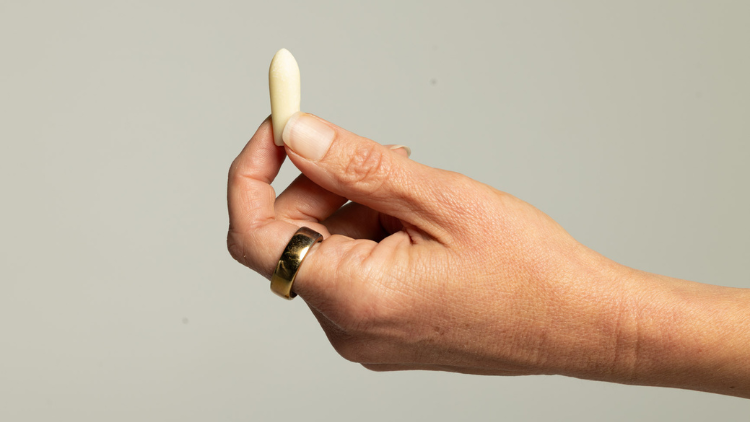
Suppositories—inserted vaginally or rectally—represent a fundamentally different delivery method. They bypass the digestive system entirely, absorbing directly through highly vascularised tissue into the bloodstream and surrounding pelvic structures. The result is faster onset, higher bioavailability, and more targeted relief than almost any other format.
For women using CBD specifically for hormonal health—menstrual cramps, menopause symptoms, vaginal dryness, pelvic tension—suppositories deliver where you actually need it. But to understand why that matters, we need to talk about something most CBD brands don’t: how much of what you take actually reaches your body.
CBD Delivery Method Matters More Than You Think
Bioavailability
Bioavailability refers to the proportion of a substance that actually enters your bloodstream and produces an active effect. It’s the single most important factor in how well any CBD product works—and it varies dramatically by delivery method.
Oral CBD—capsules, edibles, even most oils—loses a significant portion of its active compound before it ever reaches your bloodstream. It has to pass through the digestive system and liver first, a process that breaks down a large portion of what you take. Research confirms that CBD undergoes extensive first-pass hepatic metabolism, meaning that what reaches the systemic circulation is a fraction of what was on the label.
Suppositories sidestep this entirely. The vaginal mucosa is rich in blood vessels and lined with endocannabinoid receptors, making it one of the most direct routes to the ECS. CBD is absorbed efficiently, bypasses breakdown, and gets to work faster.
Targeted relief vs. systemic delivery
Most CBD formats work systemically—they enter the bloodstream and distribute throughout the body. That’s useful for general wellness goals like sleep or mood. But for symptoms that originate in the pelvic region—cramps, endometriosis pain, vaginal dryness, pelvic floor tension—systemic delivery is an indirect route.
Vaginal suppositories work on two levels at once. Because you insert directly into the vagina, CBD absorbs right where you need it most—targeting the pelvic floor muscles and vaginal walls. At the same time, it disperses throughout the rest of your body for full systemic support. No other delivery format does both simultaneously, which is what makes suppositories uniquely effective for women’s pelvic health.
CBD Suppositories Work For Women’s Hormonal Health
Women’s hormonal health is cyclical and localized in ways that general wellness products rarely account for. Menstrual cramps originate in the uterus. Vaginal dryness affects a specific tissue. Menopausal discomfort often centers on the pelvic region. A delivery method that precisely targets those structures—quickly and efficiently—is a meaningful advantage over one that routes everything through the liver first.
This is the core reason suppositories belong in any serious CBD wellness routine built around women’s health. It’s not a gimmick. It’s pharmacology.

How to Build Your CBD Wellness Routine
Start with your goal
The most effective CBD wellness routines are built around a specific intention. Before you choose a product or format, get clear on what you’re trying to support:
- Menstrual cramps or cycle discomfort: a suppository used in the days before and during your period targets cramping directly at the source.
- Menopause symptoms (dryness, discomfort, mood): vaginal suppositories address both the local tissue and systemic hormonal symptoms simultaneously.
- Sleep disruption: a suppository taken before bed supports the endocannabinoid system’s role in sleep regulation and calms physical restlessness.
- General stress and inflammation: a consistent daily CBD routine—suppository or sublingual oil—builds a baseline of ECS support over time.
Consistency matters
CBD is not a take-it-once-and-feel-it supplement. It builds up in your system over time, and most people notice the most significant effects after two to four weeks of consistent use. Start with the lowest effective dose, use it regularly, and give it time before deciding whether it’s working.
Sporadic use—taking CBD only when symptoms are already bad—is the most common reason people conclude that CBD “doesn’t work.” Routine is the keyword in a CBD wellness routine.
What to pair CBD with for best results
CBD works better as part of a broader wellness approach than as a standalone fix. A few high-impact pairings:
- Magnesium glycinate: supports GABA activity and muscle relaxation, complementing CBD’s effects on both sleep and cramping.
- An anti-inflammatory diet: omega-3s, leafy greens, and reduced sugar lower systemic inflammation, making CBD more effective.
- Stress management: cortisol disrupts the endocannabinoid system—practices like breathwork, yoga, or even a short walk support CBD’s effectiveness.
- Consistent sleep schedule: if sleep is your goal, CBD supports the system, but a consistent bedtime anchors it.
What to Look for in a CBD Product
Third-party testing and transparency
Any reputable CBD product should come with a Certificate of Analysis (COA) from an independent third-party lab. COAs confirm the CBD content matches what’s on the label, verify the absence of heavy metals and pesticides, and—for THC-free products—confirm no psychoactive compounds. If a brand doesn’t publish COAs, move on.
Plant-based vs. synthetic ingredients
For suppositories especially, ingredient quality matters. You’re introducing a product directly into sensitive mucosal tissue—synthetic binders, artificial preservatives, and low-quality carrier oils have no place there. Look for plant-based formulations with clean, recognizable ingredients and a carrier that melts at body temperature for proper absorption.
Hormone-free formulations—why it matters for women
Many women building a CBD wellness routine are already navigating hormonal complexity—whether that’s managing a cycle, perimenopause, or postmenopause. A hormone-free CBD formulation means you’re supporting your body without adding exogenous hormones into an already sensitive system. For women who can’t or prefer not to use HRT, this distinction matters significantly.
Frequently Asked Questions
How do I start a CBD wellness routine as a beginner?
Start by identifying what you want to support—sleep, cycle discomfort, menopause symptoms, or general wellness. Choose a delivery format that matches your goal, start with a low dose, and use it consistently for at least 2 to 4 weeks before evaluating the results.
What is the most effective way to take CBD?
For women’s hormonal health specifically, vaginal suppositories offer the highest bioavailability and most targeted delivery of any format. For general wellness, sublingual oils are a strong second choice. Capsules and edibles are the least bioavailable option due to first-pass liver metabolism.
How long does it take for a CBD routine to work?
Most people notice meaningful effects after two to four weeks of consistent daily use. Acute relief from a suppository can be felt within 15–30 minutes of use. The key distinction is between acute symptom relief (fast) and the broader systemic benefits of a consistent routine (gradual).
Can I use CBD suppositories as part of a daily wellness routine?
Yes—and for women with cyclical or menopausal symptoms, daily use during specific windows (the luteal phase, perimenopause, or postmenopause) can be particularly effective. Many women use suppositories on a cycle-synced schedule, targeting the days when symptoms are most likely to flare.
Is CBD safe for women’s hormonal health?
CBD is generally considered safe and well-tolerated. It is non-psychoactive and, in quality hormone-free formulations, does not introduce exogenous hormones into the body. As with any supplement, it’s worth discussing with your healthcare provider if you have a specific health condition or take medications—CBD can interact with certain drugs metabolized by the liver.
Say Hello To Your CBD Wellness Routine
Building a CBD wellness routine isn’t complicated—but it does reward intention. Know your goal. Choose the right delivery method for that goal. Use it consistently. And pair it with the habits that support what you’re trying to achieve.
For women navigating the real, specific challenges of hormonal health—cycle discomfort, menopause, sleep disruption, vaginal dryness—suppositories aren’t just one option among many. They’re the option that actually gets CBD where your body needs it, in the amount your body can use.
Hello Again makes three plant-based, hormone-free suppositories designed for exactly this. Each one is formulated to meet you where you are—whether that’s your cycle, your sleep, or your stage of life. Wherever you are, there’s a routine that works for you.
Have questions? Email us. Seriously—we answer.
Key Takeaways
- Consistency Drives Results: A CBD wellness routine works best when it’s built around a specific goal and used consistently over time.
- Delivery Method Determines Bioavailability: Suppositories absorb significantly more CBD than capsules or edibles by bypassing first-pass metabolism.
- Vaginal Suppositories Offer Unique Benefits: For women’s health, vaginal suppositories provide targeted pelvic relief and systemic absorption that no other delivery method replicates.