
You feel a shift.
Maybe it’s subtle at first—sleep that used to come easily doesn’t; the energy you relied on feels borrowed; the version of yourself you knew so well starts to feel just slightly out of reach. You’re not unwell, exactly. But you’re not quite right, either.
For millions of women in their 40s and 50s, this feeling is familiar. And for too many, it goes unnamed, undiscussed, and uninvestigated.
Here’s what we know: your body is always communicating. Hormone biomarkers are one of the clearest signals it sends—measurable indicators that give real language to what you’re experiencing, moving you from “I just feel off” to “here’s what’s actually happening, and here’s what I can do about it.”
In this blog, we’ll walk you through the key hormones to know, the biomarkers worth testing, and the steps you can take to feel like yourself again.
What Are Biomarkers And Why Do Hormones Matter?
Your body is constantly generating data. Temperature, blood pressure, cholesterol— these are all biomarkers, measurable values that give us a window into what’s happening beneath the surface. But it helps to understand the difference between a biomarker and what it measures.
Think of it like a thermostat. The temperature reading is the biomarker, the measurable signal that tells you what’s going on. The system doing the actual work? That’s the hormone. A biomarker is the measurement. A hormone is the chemical messenger itself—produced by your endocrine system, traveling through your bloodstream, and responsible for driving real change throughout your body. When we talk about hormone biomarkers, we’re talking about the specific values we measure in your blood to understand how those hormones are behaving—how much is present, whether levels are rising or falling, and what that means for how you feel.
And when they’re off—even slightly—you feel it.
What many women don’t realize is that hormones aren’t just a reproductive concern. Yes, they govern your menstrual cycle and fertility, but they also regulate your mood, metabolism, sleep quality, ability to focus, and even how your body stores fat. Estrogen, progesterone, testosterone, cortisol, insulin, and thyroid hormones like T3 and T4 are all working in concert—a finely tuned system that, during perimenopause and menopause, begins to change.
When you test your biomarkers, you stop second-guessing your own experience. You have evidence. And evidence gives you options. It moves the conversation away from “this is just part of getting older” and towards something far more useful: understanding. When you can see your hormone levels on paper, you stop second-guessing your own experience. You have evidence. And evidence gives you options.

The Perimenopause Window
Perimenopause doesn’t arrive with a clear announcement. For most women, it begins somewhere in their early-to-mid 40s, sometimes earlier, and it can last anywhere from a few years to a decade before periods stop altogether. It’s a transition, not an event. And it’s one the medical world has historically been slow to discuss openly.
During this window, your hormone levels don’t decline in a straight, predictable line. They fluctuate—sometimes wildly. Estrogen can surge and dip within the same week. Progesterone, which has a naturally calming effect on the brain, starts to drop. Testosterone, often overlooked in women’s health conversations, begins to decline too. The result is a body that can feel genuinely unpredictable.
This is where perimenopause symptoms and hormones become deeply connected. The brain fog that makes you lose your train of thought mid-sentence? Hormonal. The anxiety that appears out of nowhere, even when life is good? Hormonal. The 3 AM wake-ups, the sudden weight gain around the middle, the low mood, the loss of libido—all of it can trace back to shifting hormone levels.
The problem is that these symptoms are so varied and so easily attributed to stress or busy lives that women often go years without anyone joining the dots. Tracking hormone biomarkers during perimenopause changes that. It gives both you and your doctor a clearer picture, not just of where your hormones are today, but of how they’re changing over time.
Because in this decade, that context is everything.
The Key Hormones Every Woman Should Know
So what exactly are we looking for? Think of your hormones as a team. Each one has a distinct role, and when one member starts underperforming, the whole system feels it. Some of what we track are the hormones themselves—like Estrogen, progesterone, and testosterone.
Others are biomarkers: measurable indicators that signal how those hormones behave and where your body is in its hormonal journey. Understanding both gives you the full picture.
Estrogen (Estradiol/E2)
Estradiol is the most active and abundant form of Estrogen, and it’s arguably the most influential hormone in a woman’s body. It supports brain function, bone density, cardiovascular health, skin elasticity, and vaginal tissue health. When Estradiol levels decline, the effects are wide-ranging, including hot flashes, brain fog, disrupted sleep, vaginal dryness, and mood shifts, all classic signs that Estrogen is dropping.
Progesterone
Often called the calming hormone, works in balance with Estrogen to regulate mood, support deep sleep, and keep anxiety in check. It tends to decline earlier than Estrogen during perimenopause, which is why heightened anxiety and restless nights are often among the first symptoms women notice—long before they connect them to their hormones.
Testosterone
Testosterone isn’t just a male hormone. Women produce it too, and it plays a vital role in maintaining energy levels, libido, muscle mass, and mental sharpness. When testosterone declines—which it does gradually from the mid-30s onwards—the signs often show up as fatigue, reduced motivation, and a quiet but persistent flatness that’s hard to explain.
FSH (Follicle-Stimulating Hormone)
The brain produces FSH and stimulates the ovaries. As the ovaries become less responsive during perimenopause, the brain produces increasing amounts of FSH to compensate. Elevated FSH is one of the most recognized biomarkers of menopause, a signal that the body is shifting into a new hormonal phase.
Cortisol
Cortisol is your primary stress hormone, released by the adrenal glands in response to pressure, poor sleep, or perceived threat. In small doses, it’s essential as it gets you out of bed in the morning and keeps you sharp. But chronically elevated cortisol actively disrupts Estrogen and progesterone levels, drives inflammation, and amplifies almost every perimenopause symptom going. In midlife, when life pressures often peak, cortisol and women’s health become deeply intertwined.
Thyroid Hormones (TSH, T3, T4)
Your thyroid regulates metabolism, energy production, body temperature, and mood. Thyroid hormones and menopause are frequently confused because the symptoms they produce—fatigue, weight changes, low mood, brain fog—overlap almost entirely. An underactive thyroid is particularly common in women over 40, and without understanding this biomarker, it’s easy to misattribute what’s really going on.
Now that you know what you’re looking for, the next step is finding out where you actually stand.

Biomarker Testing And How to Advocate for Yourself
Understanding your hormones is powerful. But knowing your own numbers? That’s where everything changes.
The good news is that getting tested is more accessible than ever. Your first port of call is your doctor, who can request a basic hormone panel—typically covering FSH, estradiol, and thyroid function. If you want a more comprehensive picture, private clinics and functional medicine practitioners offer broader panels that include testosterone, cortisol, and progesterone. And if you prefer a more expansive view of your overall health, platforms like Superpower test across 100+ biomarkers, giving you a detailed baseline that goes well beyond hormones alone.
Whichever route you choose, go in prepared. Tracking hormone biomarkers is only useful if you’re testing the right ones, so ask specifically or find a test that fits the markers that matter to you. And if your results come back and you’re told everything looks “normal,” don’t be afraid to push further. Reference ranges are broad, and what’s technically within range isn’t always optimal for you; how you feel matters as much as the numbers on a page.
This is why tracking your symptoms alongside your biomarker results is so valuable. Keep a journal, use an app, note patterns, because the combination of how you feel and what your hormones are doing tells a far richer story than either one alone.
What to Do With Your Results
So you have your numbers. Now what?
First, resist the urge to panic or self-diagnose. Biomarker results are a starting point, a conversation opener, not a verdict. What they give you is direction, and direction is everything when you’ve spent months or years feeling like something is off without being able to name it.
Start with the lifestyle levers, because they’re powerful and they’re yours to pull right now. Sleep is non-negotiable—chronic sleep deprivation drives cortisol up and pulls progesterone down, creating a hormonal cycle that’s hard to break. Nutrition matters, too; a diet that supports stable blood sugar reduces cortisol spikes that disrupt everything else. Regular movement—particularly strength training—supports testosterone levels, improves insulin sensitivity, and helps your body manage estrogen more effectively. The good news is that each of these levers directly influences your hormone biomarkers, meaning the lifestyle changes you make today will show up in your results tomorrow.
If your results show a significant hormonal imbalance, it’s worth having an honest conversation with your doctor about your options. Hormone Replacement Therapy (HRT) is experiencing a well-deserved renaissance. Decades of misplaced fear are being replaced by a much clearer, more nuanced understanding of its benefits for women in perimenopause and menopause. Your biomarker results give that conversation a foundation, moving it from “I just don’t feel right” to a specific, evidence-based discussion about what your body actually needs.
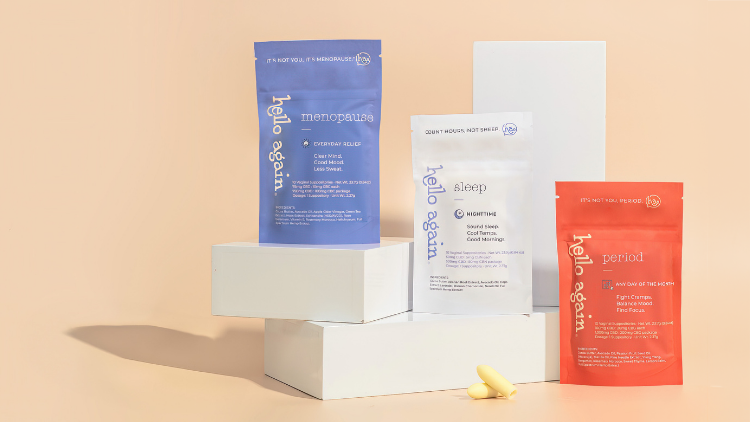
For women looking for additional daily support, Hello Again’s plant-powered CBD vaginal suppositories offer a hormone-free option designed to support mind, body, and sleep.
Finally, think of testing as an ongoing practice rather than a one-time event. Hormones shift—that’s the whole point. Retesting every six to twelve months gives you a picture of how your levels change over time and allows you to adjust your approach as your body evolves.
Say Hello to Relief
Once you understand what your body is telling you, the next step is finding what supports it. And that looks different for every woman.
Hello Again was built on a simple belief: women deserve more ways to feel better. Our thoughtfully formulated CBD vaginal suppositories bring a delivery method long used in women’s health into the present—hormone-free, plant-powered, and made with carefully curated cannabinoids and natural botanicals.
What makes Hello Again particularly relevant to biomarkers and hormonal health is the intentionality behind each formula. The Menopause suppository combines CBD and CBC, known to support a clearer mind, a steadier mood, and a more grounded day—addressing some of the most common and disruptive symptoms caused by shifting hormone levels.
Think of it as targeted, daily support that works alongside whatever else you’re doing—whether that’s lifestyle changes, HRT, or simply learning more about your hormonal health.
Because understanding your body is only the beginning; what you do with that knowledge is where the real change happens.
Feel Like Yourself
You feel a shift. And now you know that feeling isn’t something to push through, dismiss, or explain away. It’s your body communicating—and hormones and biomarkers give you the tools to listen.
The women who thrive in perimenopause and beyond aren’t the ones who quietly accept feeling off. They’re the ones who ask questions, seek answers, and build a toolkit that works for them. Testing your hormone biomarkers is one of the most empowering steps you can take for your health in midlife, not because it has all the answers, but because it gives you a place to start.
Know your numbers. Track your symptoms. Have the conversations your younger self might not have known to have. Explore every option available to you—from lifestyle shifts to HRT to plant-powered daily support like Hello Again. And above all, trust that what you’re feeling is real, it’s valid, and it’s worth investigating.
Your body has been talking all along. It’s time to start listening.
Key Takeaways
- Your Symptoms Have a Source: Shifting hormone levels drive more than you think, and biomarkers give you the data to prove it.
- Normal Isn’t Always Optimal: Don’t accept a result that doesn’t match how you feel. Push for the full picture.
- You Have More Options Than You Think: Build a toolkit that works for you and start by knowing your numbers.