
January is the season to “reset,” “transform,” or “become a whole new person.” And if you’re navigating menopause? That pressure hits differently. While the world is busy sprinting into the new year, your body might be begging for something far more radical: rest. Because here’s the truth: menopause insomnia is real, common, and exhausting.
It’s not a lack of discipline. It’s not bad habits. It’s your biology shifting gears. And no vision board or 30-day challenge is going to override a body that’s running on empty.
That’s why, this January, we’re not subscribing to “New Year, New You.” We’re choosing something smarter. Softer. More sustainable.
This season is about understanding what your body is moving through and giving yourself space to rest without guilt. Sleep may feel impossible some nights, but there are real reasons behind it and real ways to make it easier. Instead of pushing yourself to “do more,” you get to choose rituals that support you, not pressure you.
Because in menopause, rest isn’t indulgent.
It’s essential.
Why Sleep Matters More During Menopause
Sleep is so much more than a nightly recharge. It’s the system that keeps hormones balanced, moods steady, metabolism humming, and your brain and body functioning the way they’re supposed to. When sleep is solid, your body resets with you. When it’s not, everything can feel slightly off. Menopause makes this even more pronounced. Hormonal shifts mean that a night of light tossing and turning can easily snowball into a complete next-day crash.
Your Body Is More Sensitive to Sleep Loss in Midlife
Research shows that menopause dramatically increases the likelihood of disrupted sleep. The Sleep Foundation reports that up to 56% of women in perimenopause experience significant sleep disturbances, and the National Library of Medicine notes that about one in four women deal with full-blown menopause insomnia. Hot flashes alone have been shown to increase nighttime waking by up to 40%, making it even harder to maintain consistent rest.
This isn’t simply “getting older.” These changes are tied directly to the hormonal fluctuations that define perimenopause and menopause. When estrogen and progesterone shift, your sleep cycles shift with them, often in ways that feel unpredictable and frustrating.
How Poor Sleep Makes Menopause Symptoms Worse
Sleep and menopause symptoms tend to feed off each other. When sleep is disrupted, your stress response ramps up, inflammation rises, and your body has a harder time regulating temperature. That means the very symptoms that woke you up—the night sweats, the anxious mind, and the aches—become more intense the next day.
Harvard Health notes that a lack of sleep can increase inflammatory markers, which helps explain why symptoms like bloating, joint pain, irritability, and fatigue feel sharper after a poor night of rest. It’s not in your head; it’s a biochemical reaction.
Why Prioritizing Sleep Matters Now
With so many systems shifting at once, sleep becomes a proper foundation for managing menopause well. It supports your energy, your mood, your cognitive clarity, and your ability to handle the day without feeling stretched thin, all things that tend to wobble during this stage of life.
And during the time of year when everyone else is busy listing goals and reinventing themselves, Hello Again invites you to do what your body actually needs after months of holiday chaos: chill. rest. repeat. This isn’t about perfect sleep hygiene or rigid rules. It’s about recognizing how deeply your body relies on rest during menopause and finding practical, grounding ways to support it, especially now.
What Menopause Insomnia Looks Like
Hormones guide almost every part of how you sleep, and menopause is a time when those hormones start to change. Drops in estrogen and progesterone, along with shifts in cortisol and melatonin, make it harder for your body to stay in a steady sleep rhythm. That’s why so many women notice new or worsening sleep issues during this stage.
Here are some of the sleep changes many women experience.
The Most Common Menopause Insomnia Symptoms
If sleep suddenly feels unpredictable or chaotic, you’re not imagining it. According to the Sleep Foundation and the North American Menopause Society (NAMS), menopause insomnia symptoms follow a surprisingly consistent pattern for many women, even if the experience feels anything but consistent.
Trouble Falling Asleep (Even When You’re Exhausted)
Your body is tired, your brain is done, and yet you can’t settle. Many women report that the transition into sleep becomes harder during perimenopause and menopause. As progesterone levels drop, you lose some of the hormone’s natural calming and sedating effects. That shift alone can make settling into sleep feel harder than it used to.
Waking Up Multiple Times Throughout the Night
This is one of the most universal sleep disturbances in menopause. You fall asleep, only to wake up again. . . and again, sometimes for no reason at all. Other times, the culprit is obvious.
Night Sweats That Drench the Sheets
Hot flashes don’t clock out at night. As estrogen declines, your internal thermostat becomes less reliable, making it harder for your body to maintain a stable temperature. Result: sudden heat surges, drenched sheets, and a nervous system jolted awake. Estrogen changes can also disrupt REM sleep, which is why you may wake up feeling unrefreshed even after “sleeping.”
The 3–5 a.m. Wide-Awake Window
The worst. Early-morning wakeups are another hallmark of menopause insomnia. You’re awake long before you intended, brain turned on, body restless, and sleep nowhere to be found. Cortisol spikes and shifting melatonin levels often drive these early risings. And it’s never easy to fall back asleep afterward.
A Busy Brain and a Restless Body
Many women report a racing mind, irritability, and a sense that their body can’t fully settle at night. This isn’t a personal flaw—it’s physiology. NAMS notes that hormonal fluctuations can heighten nighttime anxiety, which explains those “mind-spinning when I’m supposed to be sleeping” moments.
Why Women Blame Themselves (When It’s Not Their Fault)
Women are conditioned to believe sleep problems are something they caused—too much caffeine, too much stress, not enough discipline around bedtime routines. But menopause insomnia is hormonal, not behavioral. Your body is shifting, not misbehaving.
And if the hormone rollercoaster weren’t enough on its own, there’s another layer working behind the scenes: inflammation and stress. These two love to tag-team sleep during menopause, and once they start feeding off each other, the body can slip into that dreaded “wired and tired” state.

The Inflammation–Stress–Sleep Loop
Menopause loves a chain reaction, and this one might be the most exhausting of all: inflammation goes up, stress goes up, sleep goes down, and the cycle feeds on itself until your body feels both wired and tired at the exact same time. If you’ve been lying awake wondering why your brain is revving while your body is begging for rest… this is why.
Inflammation Makes Sleep Harder
During menopause, drops in estrogen can increase inflammation throughout the body. Harvard Health notes that even low-grade inflammation can interfere with deep sleep and make it harder to stay asleep once you finally drift off. That’s why nights can feel restless, achy, or “noisy” in a way that’s hard to explain but impossible to ignore.
Poor Sleep Makes Inflammation Worse
Here’s where the loop tightens: not sleeping well increases inflammation. The body responds to sleep loss as if it were under stress, because it is. Reduced sleep increases inflammatory markers, which then amplify symptoms such as joint pain, bloating, pelvic discomfort, and mood swings. Fun, right?
So, How Do You Break the Loop?
By supporting sleep in a way that reduces stress, calms inflammation, and helps your nervous system shift out of high-alert mode. And no, that doesn’t require a 17-step bedtime ritual or rewriting yourself to become a new person.
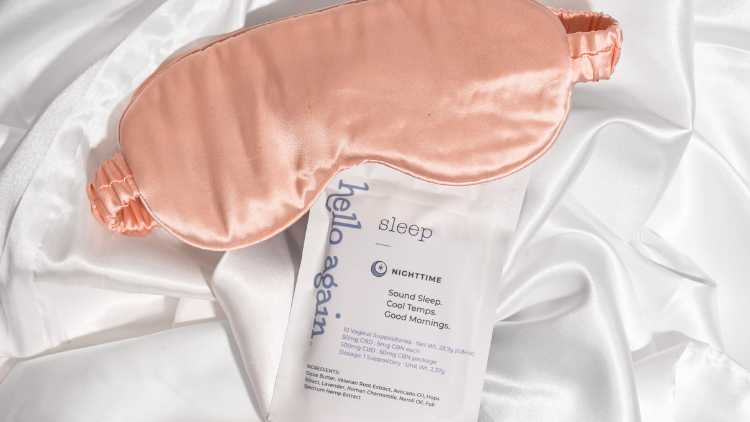
Try a Hello Again Vaginal Suppository
By the time menopause insomnia hits full force, most women have already run through the usual suspects: magnesium, melatonin, sleep teas, cooling pillows, weighted blankets, white noise, strict sleep schedules—you name it. And if those haven’t done the trick, you’re not alone. When hormones shift, sleep solutions that used to work suddenly don’t.
So at a time when we’re rejecting the whole “New Year, New You” routine, we’re definitely not opposed to trying new things that actually support our bodies. And that includes giving a vaginal suppository a chance. Before your brain screams, “Absolutely not,” hear us out. They’re not nearly as intimidating as they sound, and they make a whole lot of sense for non-hormonal menopause sleep support.
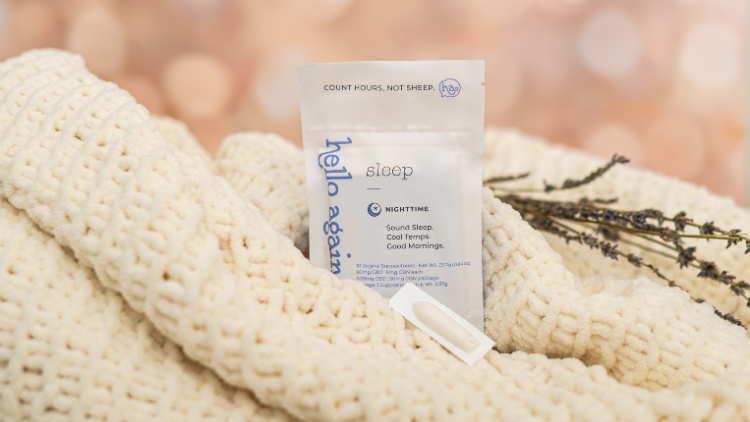
The vaginal canal is packed with cannabinoid receptors, which means CBD and CBN can get to work quickly and locally, supporting relaxation, easing pelvic tension, and helping regulate the inflammation and stress cycles that keep midlife bodies stuck awake. No grogginess. No next-day fog. No “Why did I take that?” regret.
And Hello Again’s Sleep formula pairs hemp-derived cannabinoids with soothing botanicals that work with your body’s natural systems. It supports pathways tied to temperature regulation, stress response, and deep relaxation, which just so happen to be the ones menopause loves to throw out of balance.
Best of all, it slides right into a nighttime routine you’re already craving: quiet, calm, and the permission to finally unwind. No overhauls. No resolutions. Just a small, steady ritual that helps your body remember what rest feels like.
The Role of Rest Rituals in Easing Menopause Insomnia
Once you understand what’s happening in your body, the next step is creating a menopause sleep routine that supports you—no, you don’t have to overhaul your life. Think rituals, not resolutions. Resolutions rely on pressure and perfection. Rituals rely on consistency, gentleness, and meeting your body exactly where it is.
A helpful bedtime routine for menopause doesn’t need to be elaborate. In fact, the simpler it is, the more likely you are to keep it. The goal is to give your body small cues that help regulate temperature, quiet the nervous system, and shift you into a calmer state. Even tiny adjustments can make a difference:
- Lowering the thermostat or using breathable bedding
- Dimming lights an hour before bed
- Doing a few slow breaths or a light stretch
- Eating a lighter dinner and staying hydrated
- Adding supportive tools like magnesium or a few minutes of journaling
Your body responds to patterns, especially during menopause, when so many internal patterns are changing at once.
Create something intentional. Choose the moments that help you wind down: a warm bath, a quiet skincare routine, a few minutes of stillness. Let them honor rest rather than adding to stress. Add Hello Again Sleep as the last step, and give your body a clear signal that it can finally settle, the final cue that tells your system, we’re done for the day.
There’s no pressure to do everything, just the encouragement to do what feels nourishing. Because the real secret to menopause insomnia relief isn’t perfection. It’s repetition. A steady ritual. A few minutes of quiet. A body that finally gets permission to rest.
And in a season where everyone else is pushing for bigger, better, faster, you’re choosing something far more powerful: a ritual that helps you actually feel human again.
Rest Is the New Resolution
When it comes to menopause insomnia, the loudest message isn’t “do more.” It’s actually the opposite. No reinvention this year. Instead, we’re responding to what your body’s been hinting at: please slow down. Winter is literally the universe pressing “pause,” so take the cue. Hibernate a little, rest a lot, and let your body recover and rebuild the way it’s meant to.
If you’re ready to create a rest ritual that actually supports you, Hello Again can be a gentle part of that rhythm. Our Sleep suppository fits effortlessly into the quiet moments you already have, helping your body unwind from the inside out. No reinvention required, just real, nourishing rest.
Because this year, rest isn’t the reward.
It’s the resolution.
Key Takeaways
- Menopause Insomnia Is Hormonal—Not a Personal Failing: Shifts in estrogen, progesterone, cortisol, and melatonin directly impact sleep, which is why rest can feel unpredictable during menopause.
- Rituals, Not Resolutions, Support Real Sleep: A consistent, nourishing menopause sleep routine helps regulate your body more effectively than rigid “perfect” habits.
- Hello Again Sleep Fits Seamlessly Into a Rest-Focused Rhythm: Our plant-powered suppositories offer gentle, non-hormonal support for relaxation and nighttime comfort, making them an easy addition to any bedtime ritual.